Advances in Artificial Intelligence (AI) are transforming businesses and redefining the future of work. While AI provides enormous opportunities such as increased effectiveness and work productivity, its accelerated adoption has raised critical questions about business sustainability and re-skilling of workers. The proposed workshop will invite leading scholars, government officials, and authors focusing on related research questions to have in-depth discussions and navigate the role of AI in workforce and business development. Ultimately, this workshop aims to empower our community to capture value and reduce risks in an AI-driven business environment.
The focus on workforce and business development is motivated by not only their critical importance to the sustainability of businesses and resiliency of workforce in an AI-driven business environment but also their close interdependence. First, given the widespread adoption of emerging AI technologies for business purposes, it is widely acknowledged that future workforce development must strategically incorporate changing skill demands from industry triggered by adoption of AI. While educational institutions are busy equipping students with general AI literacy, general AI literacy focusing on AI technical skills alone will not be sufficient for professional productivity and career resiliency. When businesses develop new processes and strategies aiming to drive business value, the adoption of AI might render many non-technical skills more critical for sustainable growth. Indeed, there remains a significant gap in understanding future skill needs from a long-term and sustainable perspective. This workshop will stimulate systematic research to inform us how the college degree model and curriculum can be restructured to address skill turnover and help students reach their full career potential. Second, AI innovation itself can be a solution to future workforce development. Leveraging AI technologies, especially generative AI, as pedagogical tools can improve teaching productivity and student learning outcomes. Potentially, AI innovation can play a key role to alleviate the widespread challenges of teacher shortage in both K-12 education, college programs, and enterprise-level workforce retraining initiatives. Finally, workforce development strategies and AI adoption in businesses have strong interdependence. Sustainable AI innovation relies on supply of capable AI talents, and correspondingly, workforce development strategies must also train students with future-proof skills. Therefore, we aim to facilitate a broader interdisciplinary dialogue to address significant challenges for AI-driven workforce and business development.
This workshop will be part of ICDM 2025, a premier conference for data mining, machine learning, and artificial intelligence. We have already been in contact with potential speakers and collaborators who are eager to work together and make this workshop an impactful collaboration opportunity. We welcome paper submissions focusing on AI-driven workforce and business development. The topics include but not limit to:
Dynamics of skill and task demand forecasting
AI-driven upskilling and re-skilling
Labor market matching platforms
Measuring AI-related productivity gains vs. job displacement
Corporate adoption and ROI of AI innovations
Impact of AI on organizational structure and strategy
Human-machine collaboration strategies
Policy and regulation for AI labor markets
Ethical consideration in AI-driven workforce development
Keynote Speakers
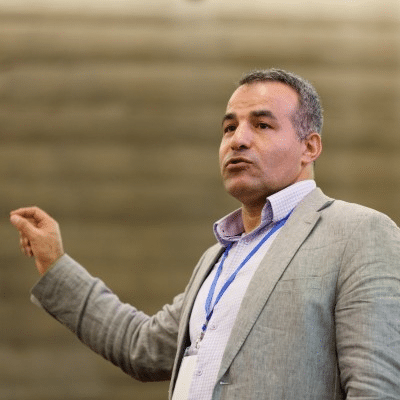
Scott Zoldi, Chief Analytics Officer, FICO
Organizers
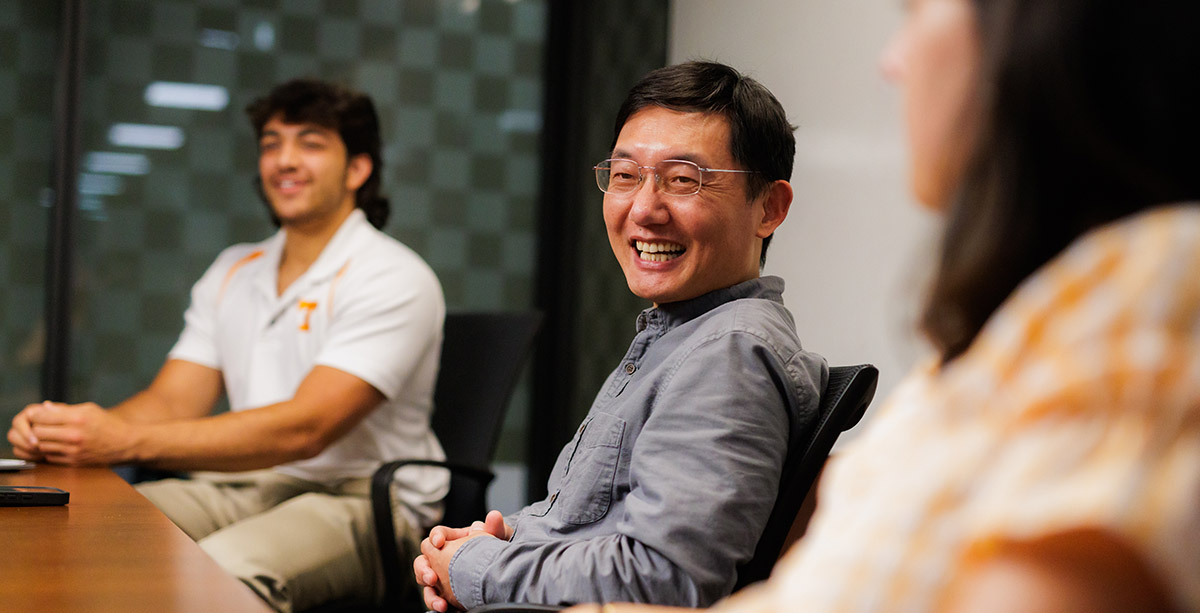
Chuanren Liu is an Associate Professor in the Business Analytics and Statistics Department at the University of Tennessee, Knoxville. His research interests include data mining and knowledge discovery, and their applications in business analytics. He has published papers in refereed journals and conference proceedings, such as IEEE Transactions on Knowledge and Data Engineering, INFORMS Journal on Computing, Decision Support Systems, European Journal of Operational Research, Annals of Operations Research, Information Sciences, Knowledge and Information Systems and SIGKDD, ICDM, SDM, AAAI, IJCAI, IEEE BigData, DSAA, etc.
Mehmet Aydeniz is a Professor of STEM education at the University of Tennessee, Knoxville. Dr. Aydeniz has a range of research interests related to the ways in which scientific knowledge is constructed, evaluated and validated, and a focused research agenda about student and teacher learning. His current research efforts focus on identifying effective strategies for integrating AI into the higher education ecosystem, the impact of advances in AI on scientific processes and scientific workforce development, skill turnover due to advances in AI, quantum workforce development and the role of open innovation in advancing quantum technology.
Important Dates
Workshop papers submission: Sep 12, 2025
Notification of workshop papers: Sep 19, 2025
Camera-ready deadline: Sep 25, 2025
Accepted papers will be included in the ICDM Workshop Proceedings (separate from ICDM Main Conference Proceedings), and each workshop paper requires a full registration. Meanwhile, duplicate submissions of the same paper to more than one ICDM workshop are forbidden.